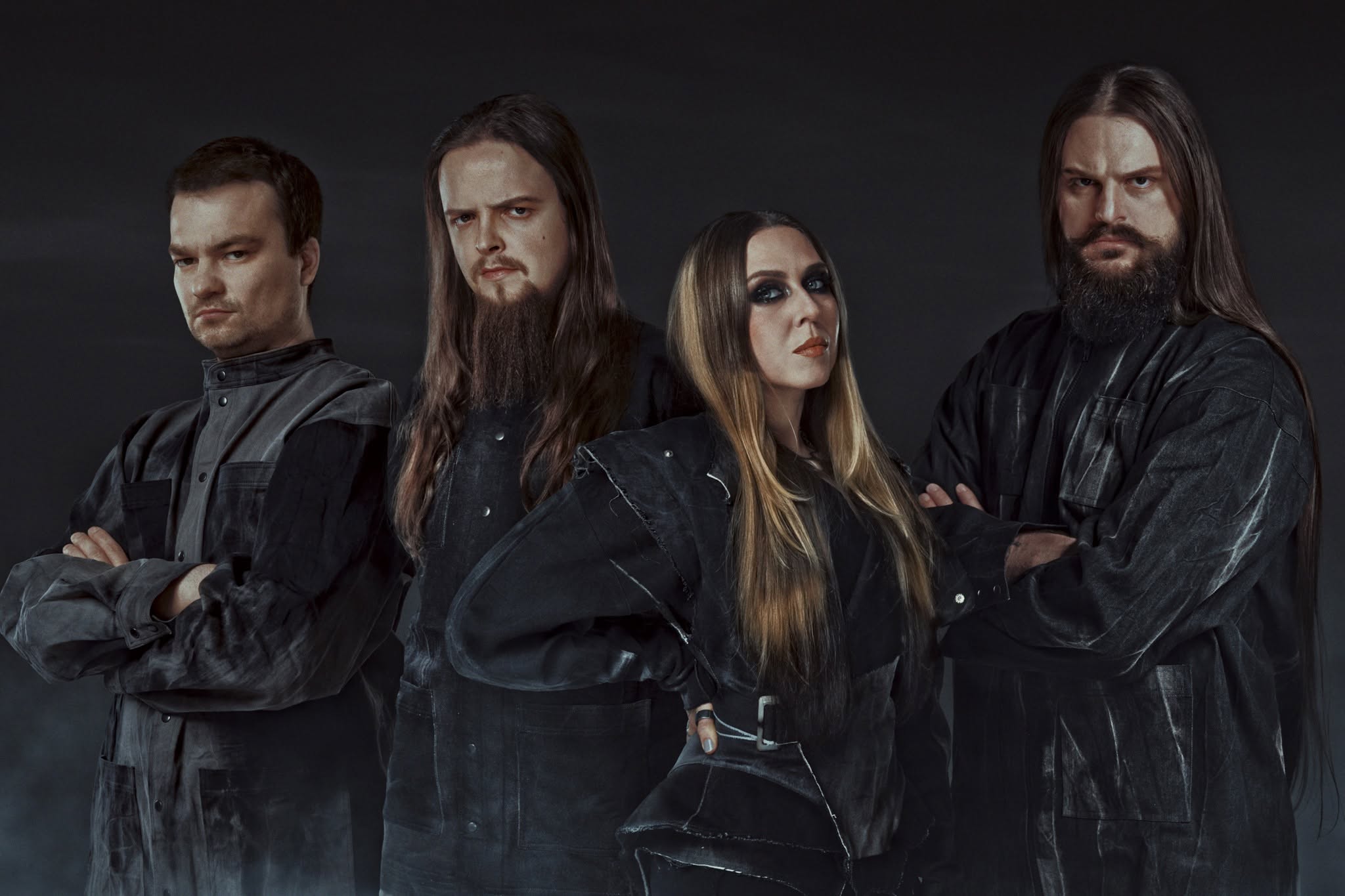
Ukrainian metal band Ignea explore nostalgia through heavy guitars, electronic sounds and the changing architecture of their home city Kyiv on their new album Monumental. Released on October 23 through Napalm Records, the album connects personal memories with futures that never arrived. In interview singer Helle Bohdanova tells more.
Asked where in Kyiv she would take someone to explain the album, Bohdanova chooses a walk past the city’s modernist buildings. Those surroundings also appear in the video for “Darkness”, but she would then want her visitor to show her somewhere that makes them nostalgic. Everyone brings different memories to the subject, and she wants the record to leave room for those experiences.
The musical starting point was an instrumental demo of “What Buildings Dream of”, written by keyboardist Yevhenii Zhytniuk. Bohdanova describes a slow metal ballad with uplifting choruses and plenty of electronics. She immediately heard something urban and introspective in it, moving away from the folk elements of the previous album and suggesting a different setting for the new material.
Thoughts about personal space and architecture gradually led her towards nostalgia. Cities offered a way to connect those ideas because they hold layers of individual and collective memory while constantly changing. She sometimes imagines the album as a walk through a city, with different places bringing different parts of the past back into view.
The title came from the monumental art associated with modernist architecture, including large mosaics and sculptures in metal or concrete. Bohdanova also hears an emotional meaning in the word. Nostalgia can carry someone back into memories strongly enough to change their mood, and that scale of feeling became another reason for the name to fit.
Following the life of Ukrainian photographer and writer Sofia Yablonska had given Dreams of Lands Unseen a central story. Monumental allowed more directions, although Bohdanova says the writing still depended on what each song needed. Some pieces grew from fragments stored on laptops, finding a place once the band began exploring nostalgia and buildings as holders of memory.
“Darkness” began with a poem for which she already had a melody, without initially imagining it as an Ignea song. Zhytniuk substantially reshaped the material after she brought it to him. The way it gradually unfolds made it a natural opener, giving listeners time to enter the album’s more reflective atmosphere.
Part of “I Am in Hell” goes back to 2020, when Bohdanova wrote it during the pandemic. What drew her back was the contrast between a melody almost like a lullaby and depressive lyrics. She had not fully understood the words when she first wrote them, but the album gave them a clearer meaning: a person caught in memories and unable to return to the present.
That uneasy side of nostalgia also helped the piece fit the record’s interest in older visions of the future. Bohdanova compares its sound to old science fiction or a television advertisement, and says the finished version makes her think of listening to a vinyl record from the 1950s. The album’s concept gave the earlier material a place within Ignea.
“Presence of the Past” looks at cities through the people passing through them and the buildings being demolished or rebuilt. For Bohdanova, that subject has an immediate connection to Kyiv, where missile and drone attacks destroy buildings almost daily. When she walks through the city, she tries to remember as much as possible because she cannot know what will still be there the following day.
Responses to an Instagram question showed the band how widely that sense of loss could be understood. They asked people which places made them nostalgic, and many described somewhere that no longer existed. Those changes had often happened without war. For Bohdanova, losing a place can feel like losing part of the memory attached to it.
“Prefab” brought a similar discovery. She initially expected a song about prefabricated housing to resonate mainly with people from post-Soviet countries, then found that listeners elsewhere recognised the same surroundings. The buildings can seem to strip away individuality while still containing very personal memories, both good and bad. The song came together quickly and became one that all the band members enjoyed.
The connection with the band’s own past reaches back to the early EP Sputnik. Bohdanova feels Monumental is closer to that release than the albums in between, partly through its electronics and partly through its interest in unrealised dreams. She points to the optimism surrounding the space race, when ideas about space travel and flying cars suggested a future that now seems to belong to another time.
There are smaller connections to the previous album as well. Ending Monumental with “Nadir” after Dreams of Lands Unseen closed with “Zenit” was Zhytniuk’s idea, creating a link between two records she sees as very different. The new song “Dreams of Lands Unseen” provides another reference back to that album.
“Between No Longer and Not Yet” brings back the Middle Eastern melodies associated with their earlier work. Bohdanova describes it as a song about putting on a favourite record when the present is dark and the future feels out of reach. She now imagines it almost as the band listening back to one of their own older releases.
“Harmony Manufactured” required more work to finish. Zhytniuk had completed the instrumental music some time earlier, but Bohdanova struggled longest with its lyrics. The band also debated where the growls and choir should sit, assembling the song from different parts until the arrangement worked. She thinks it was the last track they completed for Monumental.
The song already contained clean and extreme vocals alongside a live choir before they considered inviting a guest. Its interest in technical aesthetics and the Bauhaus school led them to Britta Görtz of Hiraes, whose range of extreme vocals seemed particularly suited to the material. Bohdanova already knew her from meeting backstage and admired her work. Görtz joined them for both the recording and the video.
Making the album also meant taking greater responsibility for the recording itself. For the first time, the band recorded the main sessions at their own headquarters, having previously worked under the supervision of their regular producer. A session drummer recorded the drums in Poland, while the band travelled to another Ukrainian city to capture the live choir.
Working without their usual producer in the room was frightening at first, because they did not know whether they could manage it. Bohdanova found the process educational and felt that recording themselves brought them closer to the material, with room to make decisions as they worked. Jacob Hansen handled mixing and mastering, and she hopes they might eventually be able to record a whole album at his studio.
The band took particular care over the analogue synthesizer sounds, which were part of the musical nostalgia they wanted to convey. The live choir served a related purpose, reflecting the uplifting side of that feeling. Recording it meant working around power cuts in another city, but the band felt strongly enough about including the choir to make the journey.
Back at their headquarters, unpredictable electricity supplies shaped the sessions. Sometimes there was a schedule suggesting a few hours when recording might be possible. Without central heating, however, the room also had to be warmed before the equipment could be used. With deadlines approaching, preparing to record took up time that was already difficult to find.
Bohdanova is relieved that they completed the album and has little desire to revisit those days. With energy infrastructure repeatedly damaged and power cuts returning, she is unsure how they could make another record if they remain in Kyiv under the same conditions. The experience has made the practical question of when and where they can work difficult to separate from plans for new music.
The pandemic and war have also changed the future she once imagined for Ignea. Plans that used to seem possible now feel distant, and even a music video can be prepared for weeks only for an attack to destroy the intended location. She says that uncertainty has made the band appreciate the things they do manage to achieve, including simply getting on the road.
At the time of the interview, Ignea were preparing for a European and UK tour supporting Evergrey, with the travel documents they needed still pending. Bohdanova says they had played only one show that year and were missing the stage. They planned to bring “Sputnik” back into the set because it fitted the new material, and were already trying to arrange more dates for the following year. For her, reaching the stage again would already be a considerable accomplishment.
Ignea interview from 2024: https://anti-commercial.media/ignea-31-01-2024/
Ignea interview from 2022: https://anti-commercial.media/ignea-06-2022/
Ignea interview 02.11.2026
Helle Bohdanova
Ignea interview 2024: https://youtu.be/cJF82scg_l4
Ignea interview 2022: https://youtu.be/OJaTFCsfWpU
Producer: Janne Vuorela
https://ignea.band/
Picture: Lame Perfect / Ignea