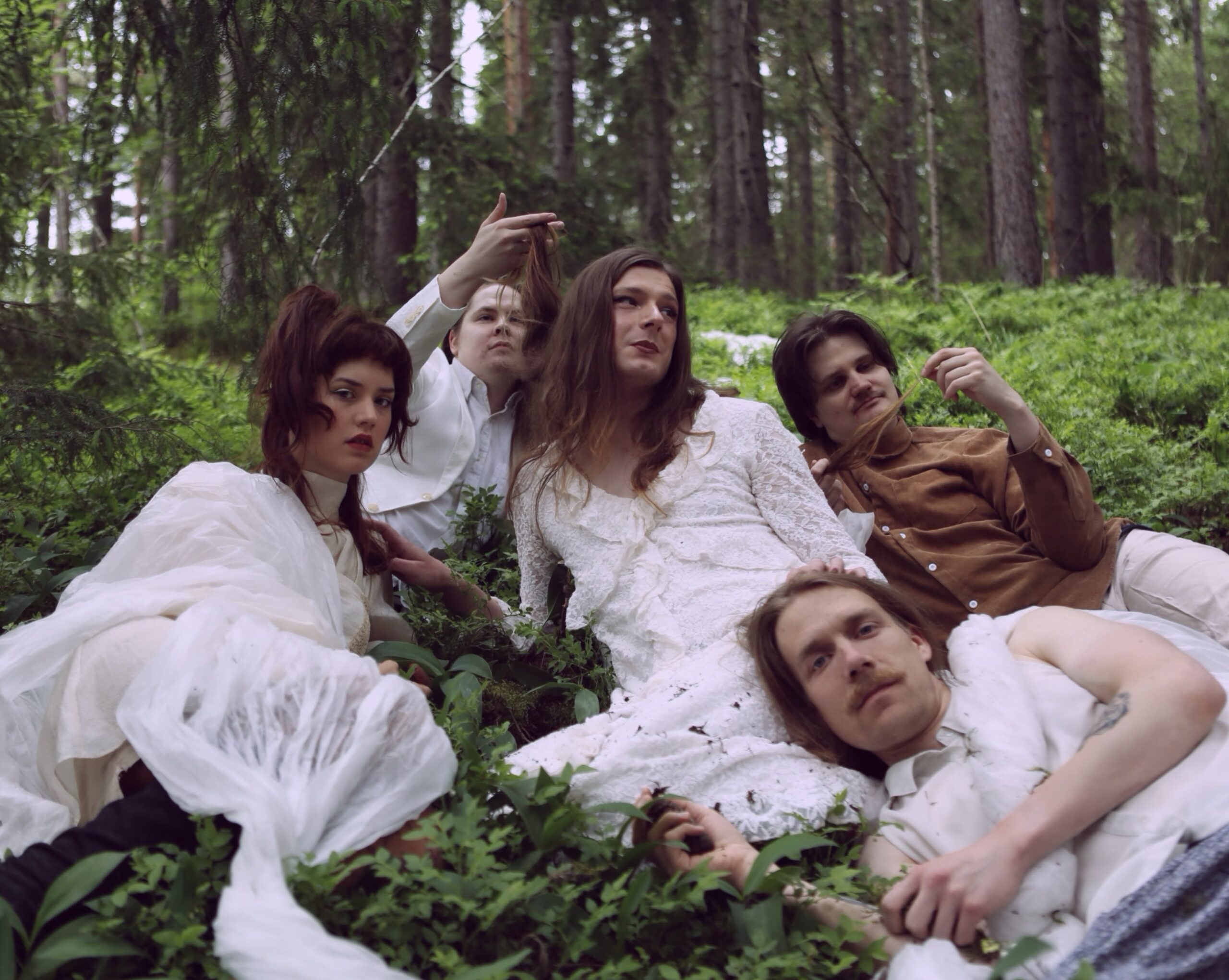
Finnish band Ruissalo Amping move from shoegaze towards a more organic form of art rock on their third album, Rihmasto. Released by Svart Records on October 16, the record explores connection through both its lyrics and a more collective way of working. In interview songwriter and founder Samuli Virtanen tells more.
After Ruusupuutarha, Virtanen felt he had taken its world of dreams and utopias far enough. He was happy with how that album had turned out, but repeating its pink candyfloss atmosphere held little appeal. It also left him thinking about how the things people hope for might actually happen, through being present with the people around them.
That change began with the writing process. Unlike the previous transition between albums, Virtanen had no songs ready for the next record when Ruusupuutarha came out. Playing shows together had given him a reason to leave room for the band, bringing unfinished ideas into rehearsals instead of developing detailed demos alone at home.
He encouraged the others to try suggestions even when he was unsure about them himself. Some ideas needed time before he could hear what they brought to a song, and accepting that became a personal lesson. He describes his role this time as closer to an artistic producer, connecting contributions from the other musicians.
“Paniikkinappula” was one example. Virtanen initially imagined a straight, driving beat, but drummer Tomi Kiviluoma changed the rhythm and gave the song a different atmosphere. For a while Virtanen still missed his original version, something he admits he had not told the drummer. After playing it several times, the new approach began to fall into place for him.
The opening track, “Janus”, changed more substantially. Virtanen remembers it as a fairly ordinary idea that ran for about five minutes. Keyboard player Lempi Elo rearranged its parts into a compact song of around three minutes, turning something he had been uncertain about into a piece he now enjoys playing.
The band spent four days at Lammaskallion Audio, recording almost all the basic tracks during that stay. Virtanen remembers long days and the pleasure of being there together, although the hardest part was sustaining the work needed to finish the album. Solving arrangements and editing vocal tracks had to fit around his day job and the rest of his life.
Moving beyond shoegaze was a conscious decision, but he did not replace it with a fixed musical plan. His own listening has never depended entirely on guitars playing at full volume, and he wanted the songs to develop from whatever emerged on piano, guitar or in the rehearsal room. Art rock feels like a useful description to him partly because of the thought put into the lyrics and their different perspectives on connection.
“Hetken olin taas olemassa” keeps a particularly ordinary moment at its centre. The piano recording was made on a phone, with a dog moving around and television advertisements audible in the background. Virtanen liked how it sounded and kept it. Those domestic noises gave the song a concrete starting point, bringing everyday surroundings into music previously associated with expansive guitar effects.
For Samuli, connection can mean something as simple as paying attention to what is nearby instead of looking at a phone, or arranging to do something with another person. There is also a more private side to it, involving the relationship between mind and body and the feeling of being connected to the world outside his own thoughts.
Personal experiences inform the lyrics, but he often works towards a more abstract situation that someone else can recognise. A particular conflict or feeling can become the starting point without the finished text having to explain his own life. How much he shares depends on what feels manageable, as well as his sense of what makes a lyric work.
The wider social atmosphere also enters the record. Virtanen describes unease about authoritarian politics, war and the speed of technological change, alongside the amount of attention absorbed by digital platforms. He is looking for a balance between remaining aware of events and becoming paralysed by doomscrolling, with friends and immediate surroundings offering something he can relate to directly.
There is room for pleasure within that concern. “Luonnon antimet” was written together with his partner, following an idea to have two people write the lyrics. It grew from their shared life and closeness. Virtanen sees the movement between difficult feelings and joy as a realistic part of the album, reflecting how different experiences coexist in daily life.
“Puhutaan vettä” brings in another writer’s perspective. Lempi Elo wrote its lyrics, music and arrangement, and Virtanen is careful to offer his reading rather than explain Elo’s intentions. He hears a possibility of communication between people who do not share a language, with common feelings and experiences allowing them to seek change together.
The album sequence was not built around a detailed narrative planned in advance. Virtanen describes a movement from private, individual experiences towards connections extending in different directions. Musical dynamics and changes of mood mattered too, helping him find a sequence that could move between the different aspects of the subject.
Working alongside other musicians in Turku has shaped his approach beyond this particular record. Watching bands such as Tyynyt and Mansion make music has been influential, even when their work is not what he listens to most often. Seeing someone’s process at close range gives him a different kind of reference.
He is particularly drawn to the commitment and artistic ambition of people working nearby. Musicians often name established international artists as influences, but Virtanen finds examples worth following in his own surroundings. The work happening close to him can affect his decisions more than he initially realises.
Because the songs were developed and largely recorded as a band, taking them to the stage has been relatively straightforward. At the Turku release show in Dynamo, the two string players from the “Rihmasto” recording also joined. The next release celebration takes place at Helsinki’s G Livelab on November 28, alongside NEØV, with more Finnish shows planned for the following year.
Virtanen is also considering writing about the songs for the band’s website and social media. He hopes those texts could open up aspects of the record that might pass unnoticed during a casual listen. For him, the music remains the first point of contact, with the ideas underneath offering further detail for listeners who want to spend time with them.
There are already thoughts about another album, including themes of joy, desire and love. He is interested in spending more time with the physical experience of playing, exploring what feels rewarding in an instrument’s sound, whether that leads towards riffs, drones or something quieter. He leaves the direction open, expecting it to depend on what matters in his and the others’ lives when they begin.
The next record may also need more time. With work responsibilities and a house to look after, Virtanen thinks allowing three or four years would help keep the process from becoming a continuous strain. He still wants to try things differently with each album, but the pace has to leave room for the life the songs come from.
Ruissalo Amping interview (Finnish) from 2024: https://anti-commercial.media/ruissalo-amping-31-03-2024-finnish/
Ruissalo Amping interview 10.11.2026
Samuli Virtanen
Producer: Janne Vuorela
https://www.ruissaloamping.fi/
Picture: Anniina Saksa / Ruissalo Amping