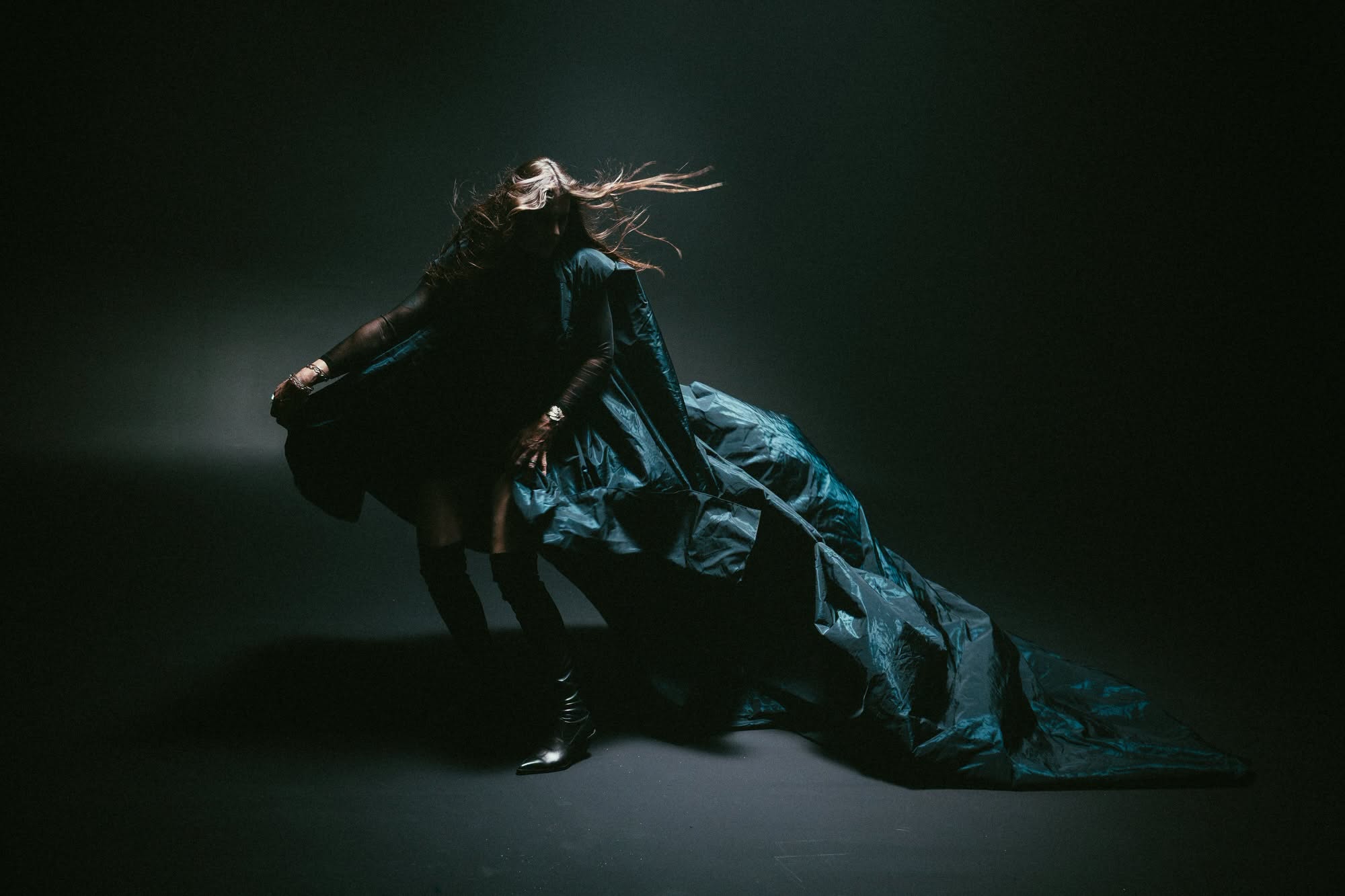
Dutch singer Floor Jansen brings compact songwriting and a heavier metal sound together on Hytress, her forthcoming solo album, due January 15, 2027. With “Bring Me Silence” introducing the record and a tour ahead, she is finding new ways to connect her solo work with her musical roots. In interview Floor Jansen tells more.
Jansen describes herself as someone who still enjoys looking beyond the boundaries of metal while remaining very much attached to it. After nearly three decades, the interest in trying something different keeps bringing her back to the music she started with, and Hytress grew partly from that desire to work with a heavier sound again.
She is quick to point out that writing under her own name did not mean discovering songwriting for the first time. Before joining Nightwish, she had already written music and helped steer her own bands. What changed with her solo debut Paragon was the scale of the audience watching, and the challenge of finding a sound that could stand alongside everything she had already done.
For that first album, the question was how her voice would work outside the large arrangements associated with Nightwish. She wanted to find out whether the music could still carry drama and grandeur without relying on metal. Hytress brings the heavier elements back, while keeping the relatively short structures and accessible choruses that were already part of Paragon.
The timing also gave her room to explore. With Nightwish not playing live, Jansen felt less concerned about bringing two similar shows to the same areas. Even so, she wanted the solo material to have its own identity. The songs she describes are closer to compact pop compositions with a heavy backing than to the extended structures she performs with Nightwish.
That approach became clearer through the production. Jansen names Bleed From Within, Gojira and Periphery among the inspirations for the low guitar tunings and the relationship between riffs and double bass drumming. The aim was to combine that weight with her own vocal approach and choruses that listeners could connect with quickly.
She and her collaborators also deliberately explored alternatives to familiar orchestral sounds. Music software offered ways to build atmosphere by processing and reshaping instruments, including guitar parts that no longer sound obviously like guitars. For Floor, that process opened up possibilities for creating scale and texture without reaching for the same symphonic elements.
The heavier direction changed how some of the songs began. A rhythm pattern could now suggest a riff and become the starting point for an entire track. Other pieces still grew from a melody or a few chords on piano or guitar, much as they had on Paragon, before the arrangement took them somewhere quite different.
“Bring Me Silence” was one of the early songs, but Jansen says it did not immediately establish the album’s sound. Its first arrangement sat closer to Paragon. As later tracks helped define Hytress, those discoveries were brought back into the single, changing its surroundings while preserving the core of the song. That position between the two records also helped make it a useful introduction to the new material.
Vocally, she sees the task as choosing from an existing range of possibilities. Her work with Nightwish has already allowed her to explore many different techniques, and she compares them to colours on a palette. Having them available does not mean every song needs all of them, so the decisions come down to what each arrangement can carry.
One area that did offer further discoveries was the backing vocals. Most of the layers use Floor’s own voice, sometimes joined by producer and co-writer Gordon Groothedde, who adds a male voice to the blend. She describes building stacks of voices and using sustained pedal notes to create atmosphere, with Groothedde suggesting parts whose role sometimes only became clear once she had sung them into the arrangement.
Those layers remained open to revision as the songs developed. They could record several ideas early and later discover that a favourite part no longer fitted once the instruments and mix had changed. Jansen says the process involved accepting that something could sound good on its own and still make the complete song too crowded.
When the conversation turns to the lyrics, she corrects the idea that Hytress is a journey into the past. Reflection is part of it, but the main concern is finding balance in the present, both within herself and in response to what life and modern society demand. That connection between the songs emerged during the writing rather than being established as a concept at the start.
“Bring Me Silence” expresses the need to create enough space to rest and find some peace. Floor keeps short notes about subjects she wants to explore, then connects them with musical ideas when the right song appears. Looking back at the finished material, she can recognise recurring concerns that were less obvious while she was working through them.
“Run” stands more on its own. She describes it as a song about being the person who does not fit into the group, approached from a position of accepting who she is. The difficulty others have with that difference does not have to become her own. Reading how listeners recognise themselves in the lyrics has been especially meaningful to her, even when they arrive at the song through very different experiences.
The order of the twelve tracks came late, once she could hear how the pieces belonged together. Jansen compares making an album to assembling a puzzle without a picture on the box. “Reverse Polarity” offered an opening with a clear build-up and had already worked well at the start of a live show. At the other end, the ballad “Haven” provides a quieter place to arrive after everything in between.
Taking the production onstage does not worry her greatly. She trusts a band that has already moved with her between small acoustic arrangements, pop material and heavier music. The drummer and both guitarists have backgrounds in metal, including more extreme styles, and she says they have welcomed the chance to explore that side of their playing.
For musicians joining her from the pop world, the audience has also made an impression. Floor recalls collaborators responding warmly to the loyalty of metal fans and the attention they give to musical details. Having played much of her solo work in the Netherlands so far, she is looking forward to developing that connection further across Europe and South America.
The smaller venues leave room for a different kind of interaction from the larger Nightwish productions. Jansen wants the emotional weight of the songs to sit comfortably alongside spontaneous remarks and moments of humour. She enjoys being able to follow what happens in the room and let the evening become something shaped with the audience.
Hytress will take up a substantial part of the coming set, although choosing from so many years of music remains difficult. The shorter songs offer a practical advantage: she can include plenty of new material and still leave room for other parts of her career. More singles are planned before the album arrives, while the live set is already taking shape.
Floor Jansen interview 29.09.2026
Floor Jansen & Aslan
Producer: Janne Vuorela
https://www.floorjansen.com/
Picture: Floor Jansen